You’ve spent months—maybe years—building your startup. You have an innovative product, a rock-solid team, and the drive to make it big. Investors should be lining up to invest with you, right?
Then comes the big moment: your first VC pitch. You walk in confident, ready to impress. But instead of the excitement you expect, there’s hesitation. It’s like expecting a standing ovation and getting polite golf claps—awkward.
The problem might not be what you’re presenting but how you’re presenting it.
Yes, your messaging matters. Can people immediately understand your value proposition? But just as important—yet often overlooked—is your visual branding. (That thing you’ve been told a thousand times is important, but maybe you haven’t prioritized.)
Your branding is one of the most powerful growth tools you have. And trust me, if your logo looks like it came from an AI image generator, people can tell. A strong, strategic brand builds credibility, attracts the right customers, and signals to investors that you’re worth betting on.
Why Branding is a Growth Engine
A strong brand doesn’t just make you look good—it actively helps you scale. Here’s how:
It Builds Instant Recognition
In a crowded market, the startups that win are the ones people remember. A cohesive, well-defined brand makes your company instantly recognizable. The more familiar your brand feels, the more trust it builds. So when investors and customers see your name again, they don’t hesitate. They already know who you are.
It Creates Emotional Buy-In
People don’t just invest in products. They invest in stories, visions, and the people behind them. A strong brand turns your startup into something people actually care about. It taps into emotions—whether it’s excitement, trust, or inspiration—making it easier for customers to stay loyal and for investors to believe in your long-term potential.
It Defines Your Market Position
Are you the bold disruptor? The sleek innovator? The trusted industry leader? If you don’t define your brand’s position, someone else will—and they might not get it right. Your branding sets the tone for how people perceive you, making it clear why you matter and how you’re different from the competition.
It Speeds Up Investor Decision-Making
Investors don’t want to sit through an hour-long pitch and still not know what your startup does. A strong brand instantly communicates credibility, clarity, and vision. It reassures investors that your startup isn’t just a smart idea—it’s a real business with the potential to scale.
Key Takeaway: Startups that invest in branding early don’t just look more polished—they scale faster, attract better funding, and build a business people want to rally behind. According to BrandZ and Kantar Millward Brown, companies with a well-defined brand grow nearly three times faster than those without.
The Building Blocks of a Powerhouse Brand
Think about the brands you instantly recognize—Nike, Apple, Airbnb. What do they all have in common?
They’ve nailed three key things:
- Clarity – People instantly understand what they do and why it matters.
- Memorability – A distinct brand identity makes them stand out.
- Consistency – Every touchpoint feels like it came from the same brand.
Your startup’s brand should do the same. Here’s what that looks like in practice:
- Logo – Instantly recognizable, scalable, and actually professional.
- Color Palette – Colors influence perception. Choose wisely.
- Typography – Your fonts should match your brand’s personality (no Comic Sans for fintech, please. Or anything, really).
- Imagery – Photos and graphics should feel intentional, not like they were picked at random from a free stock site.
Once you’ve nailed down these elements, document them in a Brand Guideline—a simple, clear reference document that ensures any marketing materials created from now on are consistent, whether that’s your website, investor deck, or social media.
Why does this matter?
Because consistency pays off. A study by Lucidpress found that brands that maintain a consistent identity across platforms can increase revenue by up to 23%. And let’s be honest—I’ve definitely bought something just because the branding caught my eye.
How Branding Influences Investor Decision-Making
Investors sift through pitch decks like trying to find a new Netflix show—fast, with little patience for anything that doesn’t hook them immediately. The startups that stand out aren’t just the ones with the best product. They’re the ones that convey trust, professionalism, and scalability before a single spreadsheet is even analyzed.
Let’s look at two case studies with very different outcomes.
Winning Strategy: How Notion’s Rebrand Attracted VC Funding
Notion, the popular workspace platform, didn’t always have the brand presence it does today. In its early days, it blended into the crowded productivity software market, struggling to make a lasting impression.
- The Problem: Notion’s branding was too minimalistic and lacked an emotional hook. It functioned well but didn’t spark excitement or differentiate itself enough from competitors.
- The Fix: They partnered with the creative agency Buck to refine their brand identity, messaging, and visual style.
- The Transformation: Notion evolved from a simple productivity tool into a creativity-driven brand. Bold colors, playful illustrations, and a more engaging visual style made the platform feel inspiring rather than just functional.
- The Outcome: Investors took notice. With a clearer, more compelling identity, Notion secured major VC funding and grew into a $10 billion company.
Key Takeaway: Your brand identity can completely transform your market position.
Branding Faceplant: How Bodega’s Identity Misstep Cost Them
Bodega, a startup aiming to replace corner stores with automated kiosks, had a promising concept, but its branding undermined it from the start.
- The Problem: The name “Bodega” was borrowed from beloved neighborhood stores without acknowledging the culture behind them. Instead of signaling innovation, it came off as out-of-touch and even disrespectful (you could call what happened a PR nightmare).
- The Fix: After public outcry, the company rebranded as Stockwell and adjusted its messaging to position itself as a complement to, rather than a replacement for, traditional stores.
- The Transformation: With a new name and a clearer, less controversial brand identity, Stockwell was able to regain investor confidence and secure over $45 million in VC funding.
- The Outcome: Unfortunately, the time lost to rebranding set them back. By the time they found their footing, COVID-19 had changed consumer behavior, making their model less viable. In 2020, the company shut down.
Key Takeaway: A branding misstep doesn’t just cost goodwill–it costs time. If Stockwell had launched with a stronger, more thoughtful identity from the start, they might have been in a position to weather the storm.
Is It Time to Rebrand?
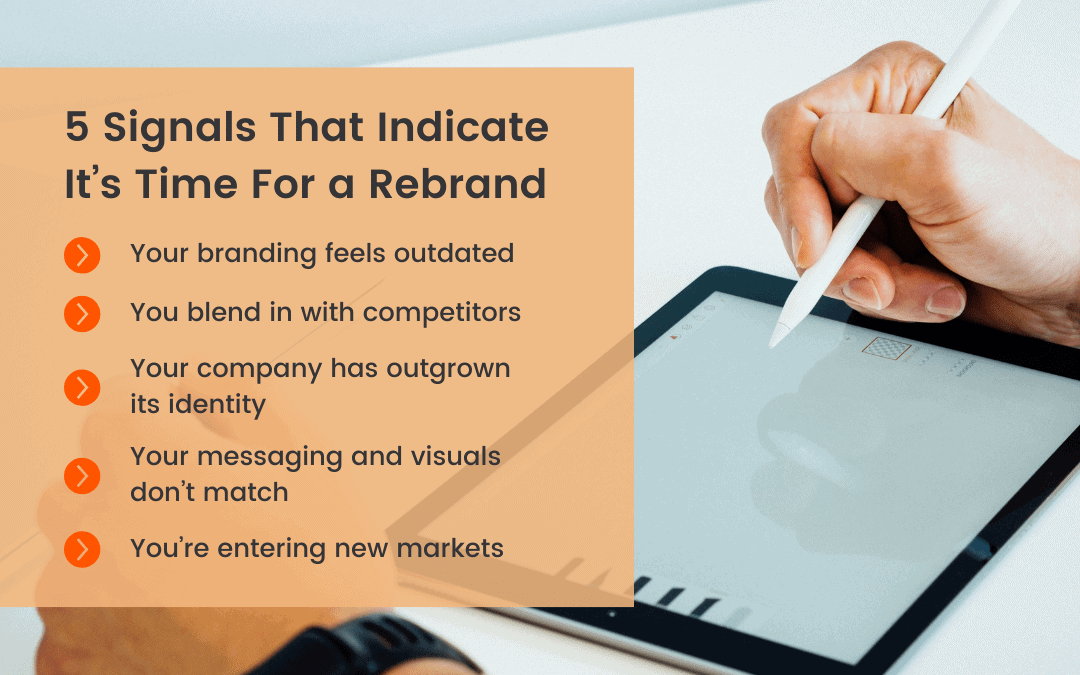
If your startup’s branding isn’t doing its job, here are five red flags that signal it’s time for a refresh:
Your branding feels outdated – If your logo screams 2010 startup, investors might assume your ideas are just as old.
You blend in with competitors – Looking like everyone else in your industry means you’re forgettable.
Your company has outgrown its identity – If your offerings or audience have shifted, your brand needs to evolve, too.
Your messaging and visuals don’t match – If people expect a fun, casual brand and get corporate stiffness (or vice versa), you’re creating confusion.
You’re entering new markets – What worked for a niche audience might not resonate globally.
Let’s take a look at how a Colorado-based AgTech company tackled these challenges head-on—rebranding not just to look better but to better communicate their impact and unlock new growth.
Successful Rebrand: How BOPA Built a Brand That Works for Them
When introducing groundbreaking technology, your brand needs to do the heavy lifting—clearly communicating your value to investors, customers, and partners. That was the challenge for BOPA – Precision Agriculture, a company developing an autonomous micro-tractor designed to help small and midsize farms save time, reduce costs, and support regenerative agriculture.
Despite having innovative technology, BOPA’s brand and website didn’t fully reflect their impact. Their messaging wasn’t immediately clear to investors or farmers, and their digital presence wasn’t built to convert curiosity into action. They needed a brand that worked as hard as their tech.
That’s where Psyche Digital came in.
The Challenge: Clarity in a Complex Industry
Like many deep-tech startups, BOPA faced a common issue:
- Their messaging wasn’t instantly clicking with investors or customers.
- Their brand identity didn’t fully reflect their innovation.
- Their website wasn’t built to convert visitors into engaged prospects.
Nothing was outright broken, but their branding wasn’t doing the job it needed to do—and in a fast-moving space, that can be a serious growth blocker.
The Fix: A Digital Presence That Works for BOPA, Not Against Them
Messaging That’s Clear, Not Complicated
BOPA’s strength lies in its deep understanding of farmers’ real-world needs. We worked together to refine their messaging, making it farmer-first and impact-driven, removing unnecessary jargon while keeping their value proposition front and center.
A Brand Identity That Reflects Their Innovation
BOPA’s micro-tractor is cutting-edge, but it’s also a practical, everyday tool for farmers. Their rebrand balanced trust, practicality, and forward-thinking innovation. The new look included:
- A sleek logo and custom iconography that captured their vision.
- A refreshed color palette that stayed true to their identity, including a subtle nod to BOPA’s female-led leadership.
A Website That Guides, Not Confuses
Instead of overwhelming visitors with technical details, the new site was designed for clarity and conversion. We focused on:
- Benefit-led copy that connects the tech to tangible outcomes.
- A clean, frictionless layout that makes it easy to explore.
- Intuitive calls to action (CTAs) that guide users toward the next steps.
The Outcome: A Brand That Does the Heavy Lifting
Now, when someone lands on BOPA’s site, they instantly understand what they do, why it matters, and how to get involved. Their brand now supports their mission, making it easier to attract investors, partners, and customers without needing to explain it all themselves.
Your Success Plan: How to Elevate Your Startup’s Brand Identity
Now, let’s talk about your startup.
Where does your branding stand? Are investors and customers immediately impressed, or are they squinting at your logo, wondering if they accidentally clicked on an old PowerPoint template?
Here’s how to make sure your brand is working for you, not against you.
Step 1: Audit Your Brand (And Be Honest)
Pull up your logo, website, investor pitch deck, and social media. Now, ask yourself:
- “Do they look like they belong to the same company?” Or does it seem like three different interns designed them on three different coffee-fueled nights?
- “Do they feel modern and professional?” If your website looks like it was built in 2012, investors might assume your business model is just as outdated.
- “Is your brand instantly recognizable?” If someone removed your logo, would people still know it’s your startup, or would they mistake it for a stock template?
If you’re unsure, get an outside opinion. And no, your friend who designed it doesn’t count as an objective source.
Step 2: Invest in Professional Design
DIY branding is fine for a college side hustle. Not for a high-growth startup looking to land serious funding. Investors are betting on credibility and long-term potential, and a cheap-looking brand screams “risky investment.”
Hire a professional designer to create a cohesive, polished brand identity (logo, color palette, typography, and visual style) that all work together.
Make sure your branding aligns with your positioning—if you’re a cutting-edge AI company, your brand shouldn’t look like it belongs to a kids’ toy brand.
Step 3: Test Your Branding with Customers & Investors
Your brand might look sleek, but does it actually resonate?
Test it. Show your branding to potential investors, customers, and even people outside your industry. Ask:
- “What do you think we do, based on our brand?” If they guess wrong, you’ve got a clarity problem.
- “Would you trust this company?” If they hesitate, your brand isn’t building the credibility it should.
- “Does this brand stand out or blend in?” If they say it feels forgettable, you might need a bolder approach.
Your brand should immediately communicate your startup’s personality, values, and vision, without you having to recite a 10-minute monologue.
Conclusion
If your branding isn’t helping you scale, raise funding, and attract customers, it’s hurting you.
The good news? You have the power to address the issues and win more deals instead.
Ready to Strengthen Your Brand? Let’s Make It Happen.
Your brand should be a magnet for investors and customers, not an afterthought. Let’s make that happen. Book a free Ignite Call today and get the branding strategy that drives real business growth.